


Mon-Sun: 9:00-19:00

 Order a call
Orthodontics in Kyiv
Orthodontics — is a branch of dentistry that deals with the diagnosis and correction of anomalies of individual teeth, dental arches, jaw relationships, and bite. The nature of occlusion, i.e., the contact between the upper and lower dental arches, affects the quality of chewing and load distribution, and may also be related to enamel wear, gum condition, and the comfort of the temporomandibular joint — TMJ.
Orthodontics for adults does not have a strict upper age limit. Teeth can be moved even after the growth of the jaws has finished; however, the treatment plan must take into account the condition of the bone tissue and gums, existing fillings, crowns, and implants. Therefore, an orthodontist consultation begins not with the selection of braces or aligners, but with a comprehensive assessment of the dental and jaw system.
Orthodontic Services at Dobrobut Dental Clinic
Orthodontist for Adults evaluates the shape of the dental arches, position of teeth, nature of the bite, condition of the periodontium, occlusion, and function of the TMJ. This approach helps plan the alignment of teeth taking into account the function of the bite and the further stability of the result.
At Dobrobut Dental Clinic, orthodontic treatment for adults may include:
- examination and analysis of the bite;
- photoprotocol and digital scanning;
- cephalometric radiography (CR), panoramic X-ray, and in certain cases - CT of the jaws;
- treatment with braces, aligners, and other orthodontic appliances;
- preparation for implantation or prosthetics;
- assessment of occlusion and TMJ function;
- installation of retainers after the active phase.
The orthodontist for adults also considers existing restorations, missing teeth, enamel wear, and gum diseases. If necessary, a gnathologist, periodontist, orthopedic specialist, therapist, or surgeon may be involved in the planning process.
Bite Correction with Braces
Braces are non-removable structures made of brackets, arches, and auxiliary elements. The arch creates a controlled force, allowing teeth to gradually move in the planned direction.
Braces are used for crowded teeth, diastemas, gaps, rotations, tilts, and various types of malocclusion. The system can be made of metal or ceramic, ligated or self-ligating. The choice depends on the clinical task, required mechanics of movement, appearance requirements, and budget.
Clear Aligners – Teeth Straightening without Braces
Aligners are a series of transparent custom trays, each of which gradually changes the position of teeth according to a digital plan. They are removed during meals and hygiene but must be worn according to the schedule defined by the doctor.
Aligners can be used for crowding, spacing, and some malocclusion issues. They are not a universal substitute for braces; in complex clinical cases, a braces system may be more suitable for performing specific tooth movements.
Indications for Orthodontic Treatment in Adults
You should schedule a consultation if your teeth are misaligned, do not close correctly, or if their positioning makes it difficult to maintain hygiene. Orthodontic treatment of teeth is also performed before implantation, crown placement, or comprehensive smile restoration.
Main indications include:
- crowded teeth and lack of space in the dental arch;
- diastemas and gaps;
- tilted, rotated, or displaced teeth;
- deep, open, cross, distal, or mesial bites;
- uneven enamel wear;
- displacement of teeth after the loss of a neighboring unit;
- preparation for implantation or prosthetics.
Pain, clicking, limited mouth opening, or tension in the chewing muscles require separate functional assessment. In such situations, a gnathologist may be involved in the planning, evaluating the functioning of the TMJ, chewing muscles, and occlusal contacts.
Stages of Teeth Alignment in Our Clinic
Modern orthodontics begins with diagnosis. Before installing the orthodontic device, the doctor assesses the position of the roots, bone tissue, jaw relationship, condition of the gums, and TMJ function.
At Dobrobut Dental Clinic, treatment is carried out in several stages:
- Consultation with the orthodontist: taking medical history, analyzing complaints, dental arches, bite, and TMJ function.
- Digital diagnostics: photoprotocol, scanning, CR, panoramic X-ray, and when indicated - computed tomography.
- Planning: choosing the method, determining approximate timelines, and cost of orthodontics.
- Preparation: treating caries based on indications, stabilizing the condition of the gums, and performing professional hygiene.
- Installation of braces or issuance of a set of aligners.
- Follow-up visits and system adjustment.
- Retention phase after the completion of active tooth movement.
During orthodontic treatment in dentistry, related specialists may be involved in the process. This is required, for instance, if a space needs to be prepared for an implant, the condition of the periodontium needs to be stabilized, or the function of the TMJ needs to be corrected.
Dental Care During Treatment and Retention Period
Careful hygiene reduces the risk of caries, gum inflammation, and the appearance of white spots around the braces. During treatment, it is necessary to clean not only the surface of the teeth but also the areas around the brackets and under the arch.
For care, orthodontic and single-tuft brushes, interdental brushes, floss, and irrigators may be needed. Aligners should be removed before eating and put back on only after cleaning the teeth. According to an individual schedule, during treatment, professional tooth cleaning is also recommended.
After teeth alignment, the retention phase begins. Fixed retainers, clear retention trays, or their combination help keep teeth in their new position. It is not advisable to independently change the wear schedule of the tray or stop retention, as the teeth may gradually shift.
The Advantages of Orthodontics for Adults at Dobrobut Dental Clinic
The advantage of a comprehensive approach lies in the fact that the doctor plans the outcome together with related specialists when necessary. This is especially important for adult patients with crowns, missing teeth, gum diseases, enamel wear, or TMJ dysfunction.
The patient receives:
- digital diagnostics and recording of the initial condition of the dental arches;
- choice between braces and aligners based on indications;
- coordination of the tooth movement with future prosthetic procedures;
- monitoring of the condition of the gums, occlusion, and TMJ;
- clear sequence of active and retention phases.
The cost of orthodontics depends on the complexity of the issue, the chosen system, duration of treatment, number of follow-up appointments, additional elements, and type of retainers. After the diagnostics, the orthodontist in Kyiv provides a preliminary estimate according to the full scope of the treatment.
Make an appointment
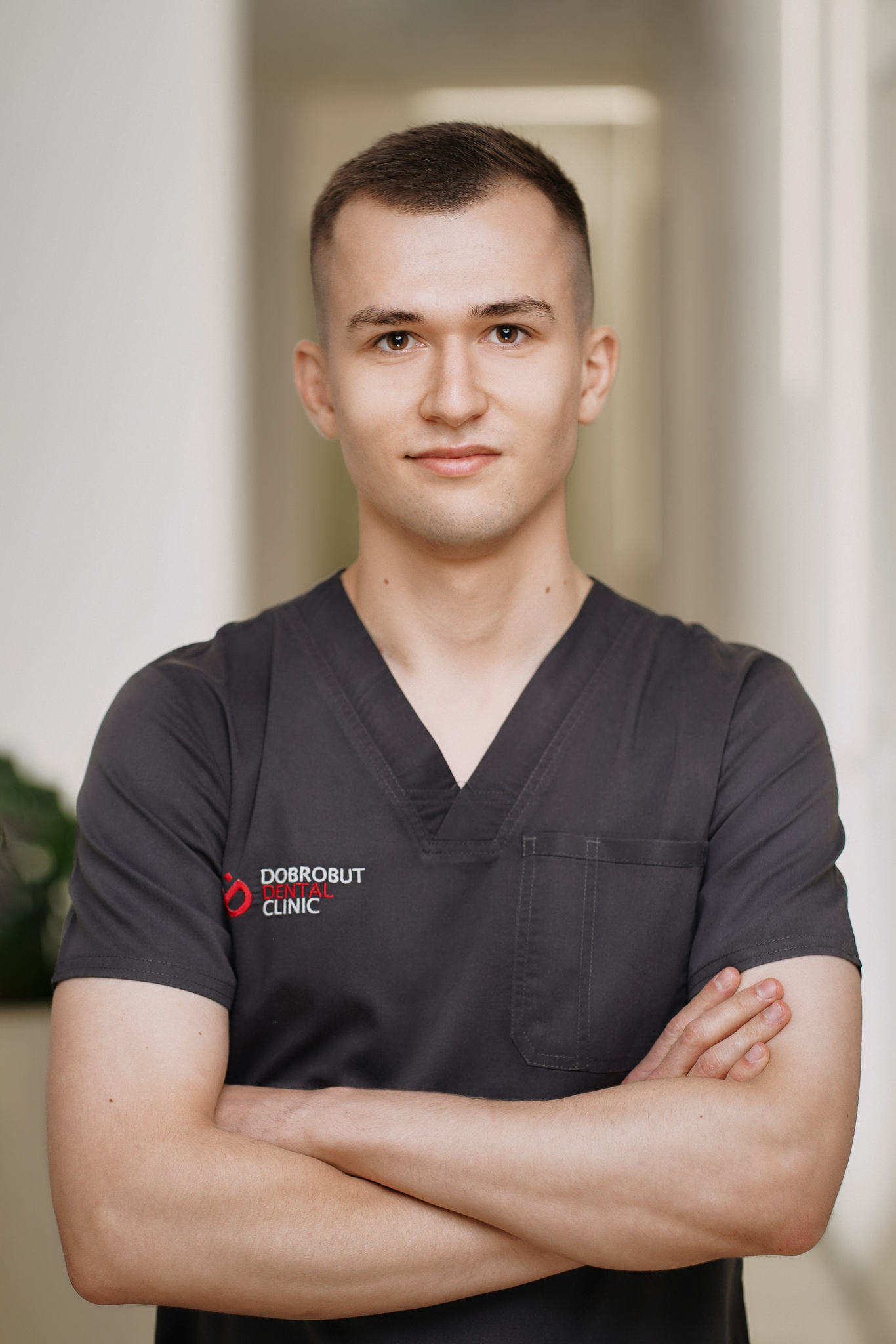
Doctors providing services:


Answers to popular questions
- Yes, teeth can be moved even after the growth of the jaws has finished. It is important that the condition of the bone tissue and gums allows for treatment to be carried out. In cases of pronounced skeletal disorders, the orthodontic stage is sometimes combined with orthognathic surgery.
- The method is chosen based on the diagnosis, not just by appearance. Braces may be more suitable for certain complex movements, while aligners are less noticeable and removable. The final decision is made after diagnostics.
- No, the removal of all wisdom teeth is not mandatory. The decision depends on their position, the presence of cavities or inflammation, the impact on neighboring teeth, and the planned treatment mechanics.
- Active treatment often lasts about 12-24 months; however, the exact duration depends on the diagnosis, the extent of movements, the chosen system, and tissue response.
- Control appointments are most often scheduled at intervals of 4 to 8 weeks, but the specific schedule depends on the type of system, stage of treatment, and planned movements. A consultation with an orthodontist at the Dobrobut Dental Clinic helps determine whether local teeth alignment is sufficient or if comprehensive bite correction is needed. After the examination, the patient receives a plan, estimated timelines, sequence of stages, and a preliminary cost estimate.
Make an appointment
Fill out the form below and we will call you back in the near future!